
Elevator Ride Quality and Vibration Analysis in San Antonio, TX: Expert Diagnostics for Commercial Buildings
Commercial elevators in San Antonio make thousands of trips each day in office buildings, hospitals, hotels and factories. If passengers notice shaking, swaying, uneven leveling or strange noises, these signs point to mechanical problems. If not checked, these issues can get worse over time.
Professional elevator ride quality and vibration analysis uses calibrated testing equipment, including tools like the EVA-625 and methods aligned with ISO 18738 standards, to measure acceleration, vibration frequency, spectral data and motion consistency so building owners get accurate answers about what is causing performance problems. We use this data to support predictive and preventive maintenance strategies that protect equipment and reduce the likelihood of costly failures or unplanned downtime.
We provide
elevator inspections, ride comfort evaluations, and vibration diagnostics for commercial and industrial properties throughout San Antonio. Elevator ride quality testing helps identify performance and vibration issues within your system.
Call Us 210-277-7772
Commercial and Industrial Elevator Vibration Analysis Services
Commercial and industrial elevators are under constant stress from passenger traffic, freight movement and busy building schedules. Using professional elevator vibration diagnostics can help find hidden mechanical issues early, before they lead to bigger problems.
Elevator Ride Quality Testing for Commercial Buildings
Elevator ride quality testing evaluates passenger comfort, operational consistency and mechanical stability. Reliable vertical transportation is essential for office buildings, retail centers and residential complexes to manage daily traffic. Key measures include acceleration, deceleration, vibration frequency, cab sway and leveling precision, all of which help identify issues that may affect occupant comfort and safety.
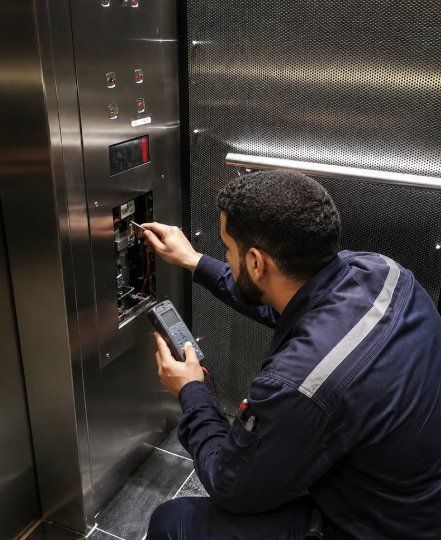
Professional elevator performance testing services lower maintenance costs, boost tenant satisfaction and extend the lifespan of equipment. Elevator vibration troubleshooting experts use advanced tools to check traction systems, guide rails, motors and suspension parts while the elevator is in operation.
Key commercial elevator testing services include
- Elevator ride quality analysis
- Elevator vibration monitoring
- Elevator motion analysis
- Elevator passenger comfort analysis
- Elevator leveling problem diagnostics
- Elevator ride performance evaluation
Industrial Elevator Vibration Testing and Mechanical Diagnostics
Industrial elevators work under heavy loads and in tough conditions, unlike standard passenger elevators. Manufacturing plants, warehouses, and freight elevators need regular vibration testing to stay safe and reliable during constant use. Inspections that check elevator vibrations can find problems like wear and tear, misalignment, structural movement, and instability, all of which can affect how well industrial equipment performs.
Elevator motor vibration analysis and traction elevator vibration testing check the parts in the machine room, such as hoist motors, counterweights and rope tension systems. These tests help catch problems early, which can prevent equipment failures. This support is important for keeping operations reliable and efficient in industrial properties.
Industrial vibration analysis commonly evaluates
- Freight elevator vibration
- Elevator equipment vibration analysis
- Structural movement
- Hydraulic pressure fluctuations
- Motor and gearbox stability
- Elevator balancing and calibration
Elevator Noise and Vibration Troubleshooting Services
Noise and vibration in elevators can indicate mechanical problems. Analyzing these issues helps us find problems before parts break. Passengers might hear rattling or feel shaking before seeing any damage. Professional services can fix these vibrations using effective methods.
Elevator resonance testing and guide rail vibration analysis help identify ride quality issues. These issues can be caused by rail alignment, roller wear, structural problems or instability in the machine room. By using professional diagnostics, we can improve passenger comfort and protect expensive equipment from wear and tear.
Common ride quality issues include
- Elevator cab sway diagnostics
- Elevator shaking problem inspection
- Elevator rough ride analysis
- Elevator vibration and noise troubleshooting
- Elevator ride comfort improvement services
- Elevator cab vibration inspection
Call Us 210-277-7772
Elevator Ride Quality Engineering for Modern Commercial Properties
Modern buildings require smooth, efficient and dependable vertical transportation systems capable of supporting tenant comfort and operational reliability. Professional elevator ride quality engineering services improve long-term system performance across commercial and industrial properties.
Elevator Modernization Ride Quality Testing
Modernization projects should improve elevator performance instead of introducing new operational problems. Elevator modernization ride quality testing evaluates upgraded systems to confirm smooth acceleration, stable operation, precise leveling and reduced vibration levels. New controllers, traction machines, guide systems and drive components require detailed performance testing to ensure proper integration and optimal ride quality throughout the building.
Elevator vibration analysis in modernization projects allows property owners to verify system improvements and spot potential issues before passenger complaints arise. Upgraded elevators provide quieter operation, smoother travel and greater efficiency in high-rise buildings.
Modernization testing may include
- Elevator performance vibration testing
- Elevator ride quality assessment
- Elevator vibration correction services
- Elevator system performance audits
- Elevator ride smoothness testing
- Elevator acceleration testing
Elevator Ride Quality Analysis for High-Rise Buildings
High-rise buildings pose challenges for elevator performance, such as speed, travel distance and building movement. Experts analyze ride quality to reduce vibrations, sway and motion issues for passenger comfort. They examine components like guide rails and traction systems, as well as how elevators perform with varying weights.
Testing the ride quality of elevators in high-rise buildings enhances passenger comfort and reduces equipment wear and downtime. Reliable elevators boost building value, tenant satisfaction and operational efficiency in busy commercial spaces.
High-rise elevator analysis commonly focuses on
- Elevator vibration testing for high-rise buildings
- Ride comfort optimization
- Structural sway interaction
- High-speed elevator diagnostics
- Elevator vibration inspection services
- Elevator system vibration diagnostics
Frequently Asked Questions
Elevator vibration, ride quality complaints, and code compliance questions come up consistently across commercial properties in San Antonio. Understanding the causes of rough rides, how testing works and what triggers violations helps property managers make faster, better-informed decisions.
What are the most common causes of elevator vibration, shaking, or cab sway in busy commercial buildings?
Guide rail misalignment is one of the leading causes of cab sway and vibration in commercial elevators. When rails shift due to building settling, thermal expansion or inadequate fastening, the elevator car experiences lateral movement that passengers feel immediately.
Worn roller or slide guides can cause the cab to veer off its path. As the guide shoes wear down, uneven contact creates vibrations that intensify with heavier loads.
Additional causes include
- Sheave or pulley wear that introduces rope irregularity and uneven traction pull
- Motor or drive controller issues causing inconsistent acceleration and deceleration curves
- Counterweight imbalance producing oscillation throughout the travel cycle
- Deteriorated hitch or isolation mounts transferring mechanical energy directly into the cab structure
- Contaminated or worn hoist ropes creating uneven tension and cab bounce
Heavy traffic wears out components more quickly. This is why buildings with a lot of traffic in San Antonio have more ride complaints than those with less traffic.
How is professional ride quality testing performed, and what measurements are typically recorded during a test run?
We test ride quality using calibrated accelerometers placed inside the elevator cab. These devices record motion data in real-time during regular operation. This data shows what passengers feel at each stage of their ride.
Equipment such as the EVA-625 Elevator Vibration Analysis system measures horizontal vibration, vertical vibration, and noise levels against industry-accepted standards. The data collected during test runs is precise, repeatable, and objective.
Typical measurements recorded include:
Measurement
- Horizontal vibration (X and Y axes)
- Vertical vibration (Z axis)
- Peak acceleration/deceleration
- Leveling accuracy
- Door operation timing
- Noise levels (dB)
What It Identifies
- Cab sway, guide rail irregularities
- Rope bounce, drive irregularities
- Passenger comfort during starts and stops
- Floor-level stopping precision
- Dwell time, open/close speed consistency
- Mechanical noise, motor hum, resonance
We test on different floors and under various load conditions. We compare the results to established ride quality benchmarks to find any components that do not meet acceptable performance standards.
When should a property manager schedule a vibration inspection versus a standard maintenance visit?
A standard maintenance visit includes lubrication, a visual inspection and basic checks on how the equipment operates. It does not include measurements for ride quality or detailed analysis of vibration frequencies.
If occupants report shaking, unusual noises, cab sway, rough starts or uneven floors, schedule a vibration inspection. These signs suggest mechanical issues that routine maintenance cannot diagnose.
We also recommend vibration testing in these situations:
- After a major repair or component replacement
- When elevator usage has increased significantly
- Before or after a modernization project
- When preparing a building for sale or lease renewal
- When maintenance records show recurring callbacks for the same issue
Waiting for regular maintenance to fix ride complaints allows mechanical wear to grow worse, which increases repair costs over time.
Can an elevator modernization or controller upgrade introduce new noise, resonance, or leveling issues after commissioning?
Modernization projects replace motors, drives, controllers and sometimes rope systems in elevators. These changes affect how elevators speed up, slow down and handle different weights. New parts can work differently with existing mechanical elements, which may cause unexpected shaking, vibrations, or issues with leveling.
New variable frequency drives (VFDs) often cause vibration complaints after upgrades. If the drive settings are not adjusted for the specific elevator system, you may hear loud motor noise, feel vibration in the cab during acceleration or experience overshooting at floor stops.
Post-modernization ride quality testing helps confirm that new components are calibrated properly. We use instrumented testing after commissioning to verify that performance meets ride quality standards before the building owner accepts the completed work.
Which elevator code and inspection requirements most often relate to ride comfort, leveling accuracy, and excessive vibration complaints?
In Texas, the Texas Department of Licensing and Regulation (TDLR) oversees elevator safety compliance, licensing, and inspections. ASME A17.1, the Safety Code for Elevators and Escalators, is the primary technical standard that governs elevator performance requirements in commercial buildings.
ASME A17.1 includes specific requirements related to:
- Landing zone accuracy — elevators must stop within a defined tolerance of the floor level
- Door operation — closing force limits, timing standards and obstruction detection
- Speed accuracy — rated speed must be maintained within specified tolerances under varying loads
- Brake performance — stopping distance and deceleration consistency
San Antonio commercial buildings must also comply with local amendments adopted under Chapter 30 of the city's construction and building codes. Inspectors evaluate leveling performance and mechanical condition during annual inspections, and deficiencies related to these areas can result in required corrective action before an elevator returns to service.
What are the most common elevator violations found in commercial properties and how can diagnostics help prevent them?
TDLR inspections in Texas commonly cite violations related to door safety devices, leveling accuracy and inadequate maintenance documentation. Door-related issues appear frequently because door mechanisms experience high cycle wear and are directly tied to passenger safety.
Other common violations include:
- Improper landing zone stopping — cab stopping above or below floor level beyond accepted tolerances
- Non-functioning or worn safety devices — governor, safeties or buffers not meeting test requirements
- Hoist rope condition — worn, broken or improperly tensioned ropes
- Inadequate lighting — machine room or pit lighting not meeting code minimums
- Missing or expired inspection certificates — required postings not current or accessible
Instrumented ride quality diagnostics identify mechanical conditions that lead to these violations before an inspector documents them. We measure leveling performance, rope condition indicators, and drive behavior under load, giving building owners time to correct deficiencies on their own schedule rather than under a compliance deadline.
Request Elevator Performance Testing Services
Reliable elevators support building operations, tenant satisfaction and property value. Professional elevator ride quality consultants help identify performance problems before they become major liabilities.
Request elevator vibration diagnostics, ride quality testing and elevator performance analysis services today to keep your vertical transportation systems operating smoothly, safely and efficiently.